Feminism as a Theory of Literary Criticism
Share this product
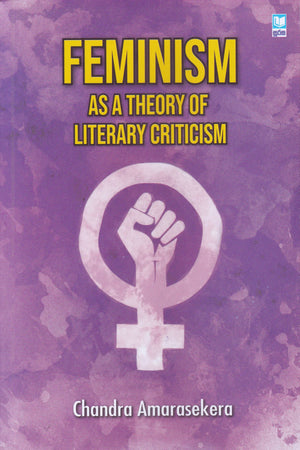
Feminism as a Theory of Literary Criticism
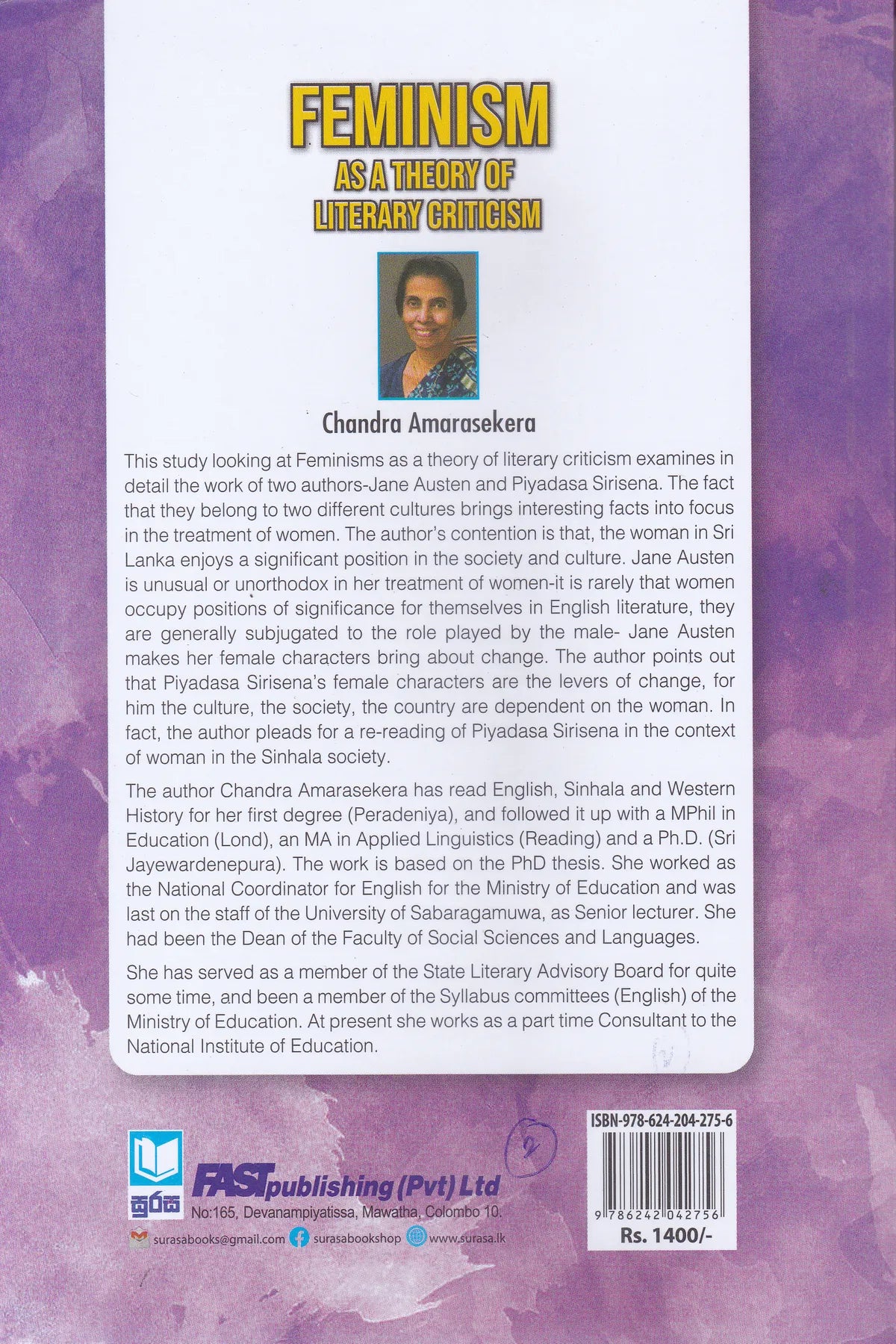
This study looking at Feminisms as a theory of literary criticism examines in detail the work of two authors-Jane Austen and Piyadasa Sirisena. The fact that they belong to two different cultures brings interesting facts into focus in the treatment of women. The author's contention is that, the woman in Sri Lanka enjoy
Couldn't load pickup availability
This study looking at Feminisms as a theory of literary criticism examines in detail the work of two authors-Jane Austen and Piyadasa Sirisena. The fact that they belong to two different cultures brings interesting facts into focus in the treatment of women. The author's contention is that, the woman in Sri Lanka enjoys a significant position in the society and culture. Jane Austen is unusual or unorthodox in her treatment of women-it is rarely that women occupy positions of significance for themselves in English literature, they are generally subjugated to the role played by the male- Jane Austen makes her female characters bring about change. The author points out that Piyadasa Sirisena's female characters are the levers of change, for him the culture, the society, the country are dependent on the woman. In fact, the author pleads for a re-reading of Piyadasa Sirisena in the context of woman in the Sinhala society.
The author Chandra Amarasekera has read English, Sinhala and Western History for her first degree (Peradeniya), and followed it up with a MPhil in Education (Lond), an MA in Applied Linguistics (Reading) and a Ph.D. (Sri Jayewardenepura). The work is based on the PhD thesis. She worked as the National Coordinator for English for the Ministry of Education and was last on the staff of the University of Sabaragamuwa, as Senior lecturer. She had been the Dean of the Faculty of Social Sciences and Languages.
She has served as a member of the State Literary Advisory Board for quite some time, and been a member of the Syllabus committees (English) of the Ministry of Education. At present she works as a part time Consultant to the National Institute of Education.